Henna Night Outfits for Moroccan Brides 2026: Colors, Caftans & Budget
2026 henna night outfit guide: why green and golden yellow? Caftan, djellaba or modern abaya? Realistic head-to-toe prices.
Green & Golden Yellow: Color Codes & Regional Styles
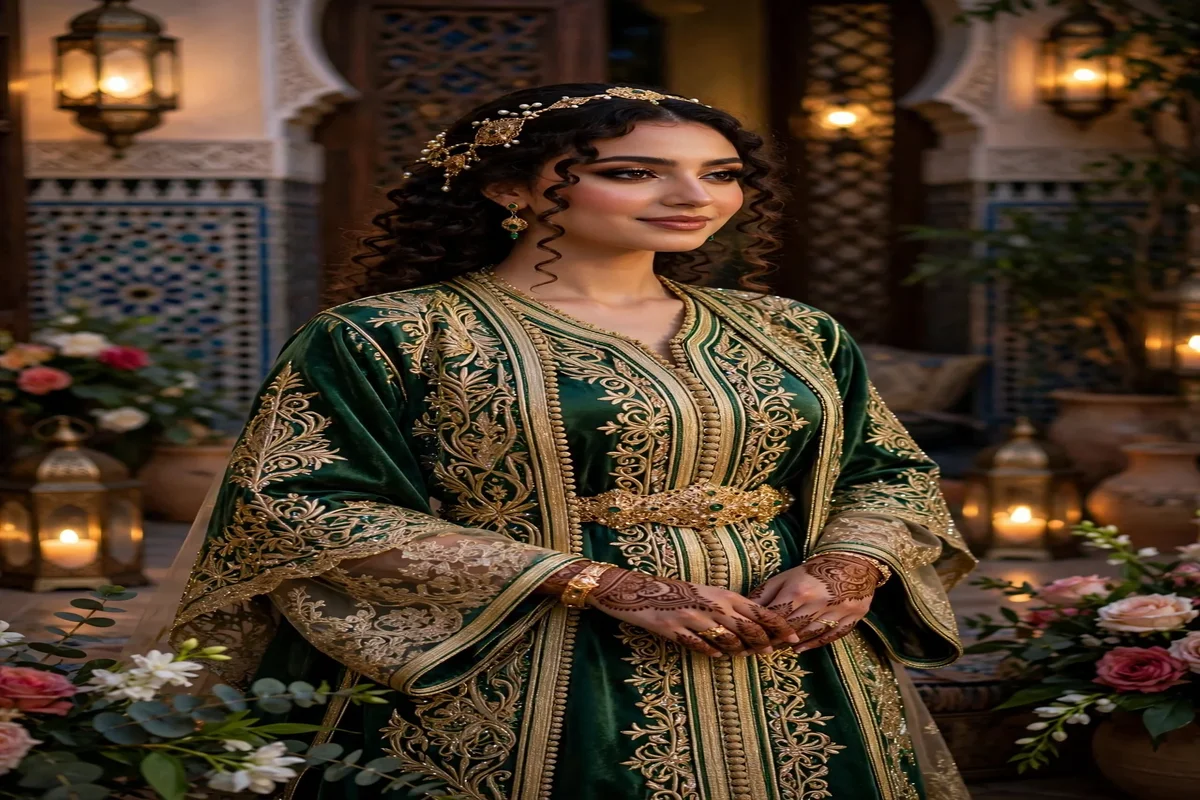
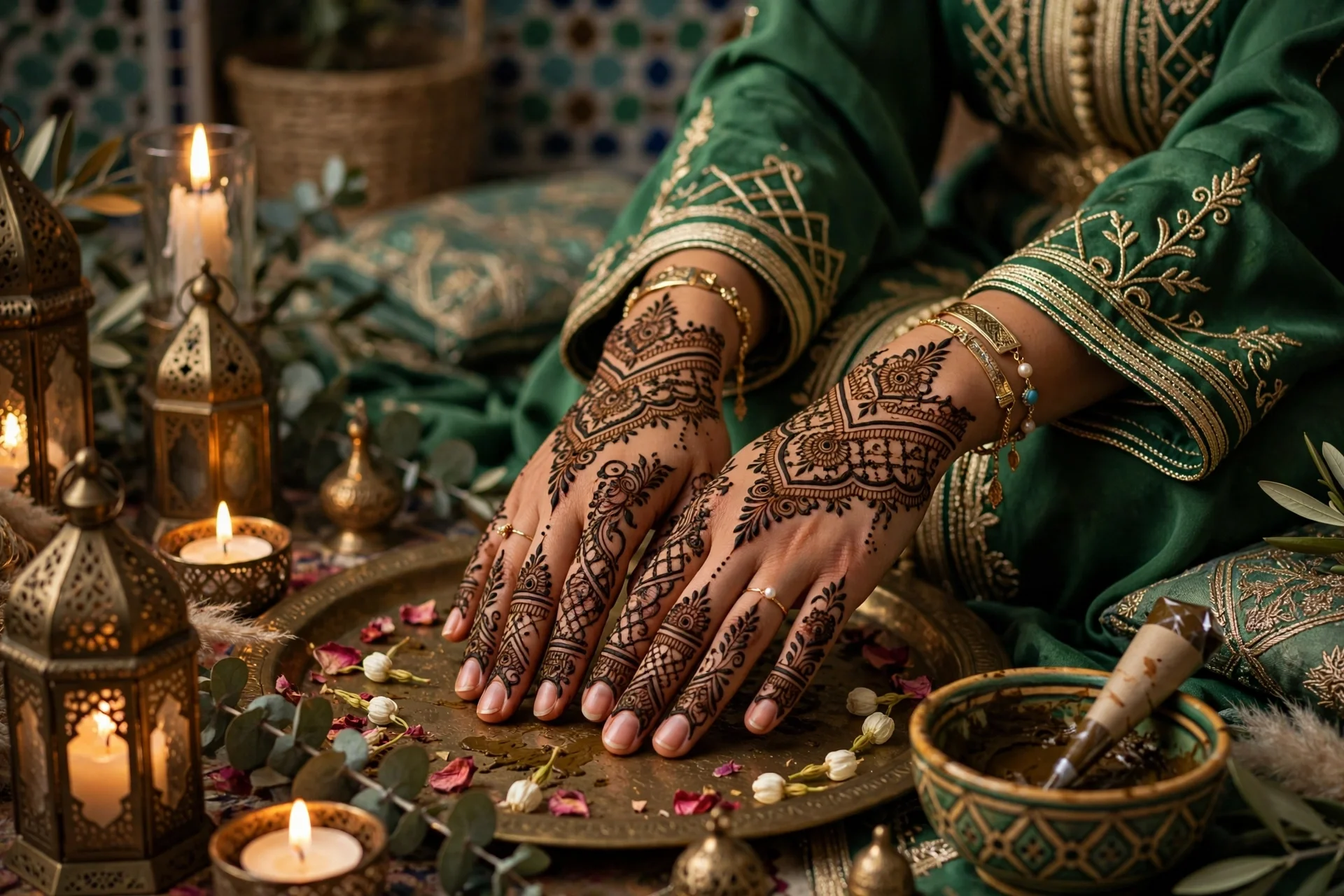
On henna night, Moroccan brides stick to two classic shades: green or golden yellow. Emerald green stands for blessing and contrasts sharply with dark henna stains on the hands, while gold catches candlelight and lantern glow. Regional tastes in 2026 differ: royal green with gold skalli embroidery dominates in Fes and Rabat, mustard yellow with a mdamma belt in Casablanca and Marrakech, and silver-and-pearl accents inspired by the chedda in Tangier and Tetouan. Skip white, which belongs to the main hall day, and avoid black due to mourning associations. If you are an MRE bride hosting a July or August henna evening, pick breathable silk or lined chiffon instead of heavy velvet.
Caftan, Djellaba or Modern Abaya: Prices & Tailoring
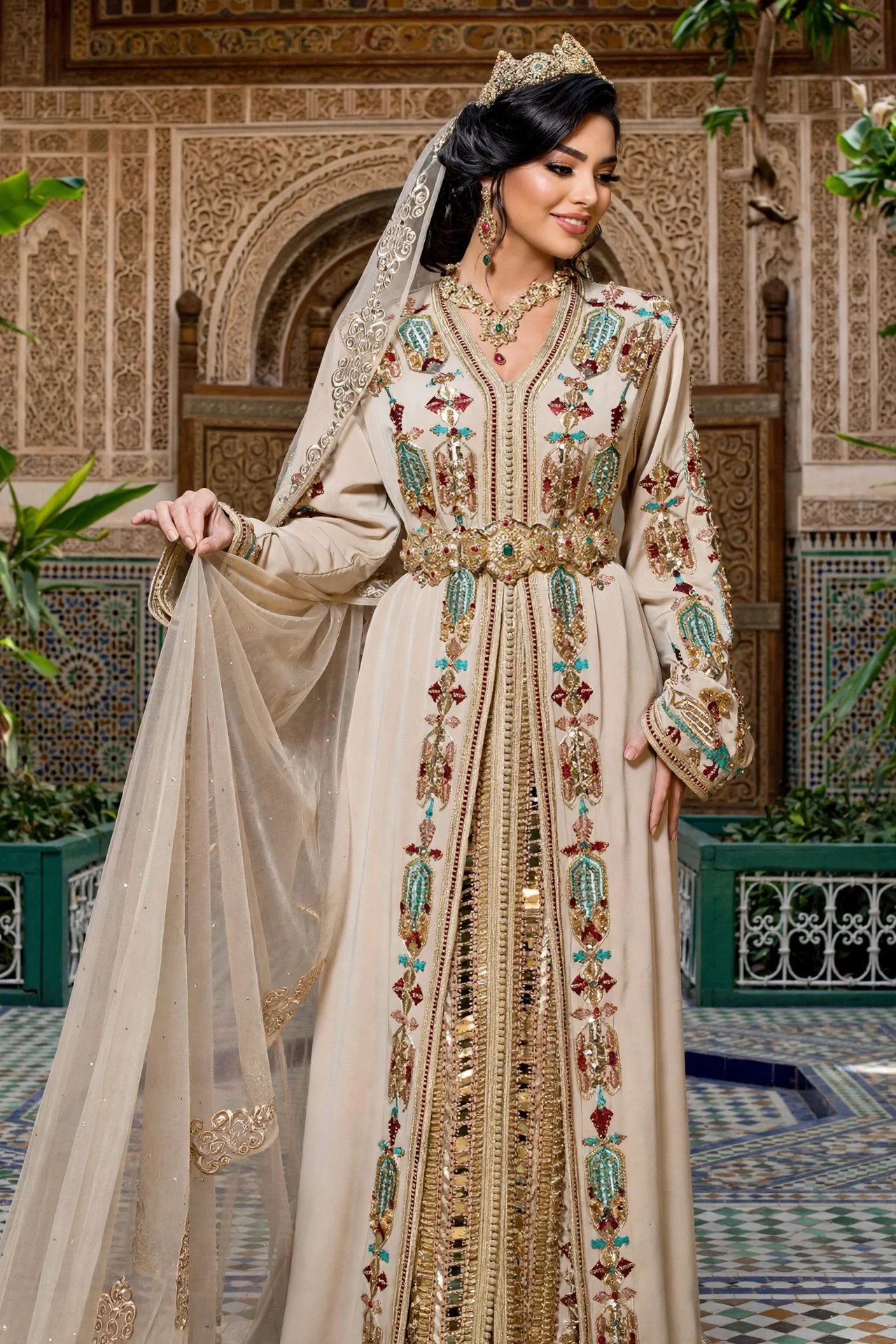
Three practical choices fit three distinct budgets. An embroidered caftan (2,500–6,000 MAD / 230–555 EUR to buy, or 1,000–2,200 MAD / 90–200 EUR to rent) delivers the strongest camera presence. A modern belted djellaba (600–1,500 MAD / 55–140 EUR) keeps you comfortable on the dance floor all night. A contemporary abaya finished with sfifa and aakad buttons (900–2,500 MAD / 85–230 EUR) looks refined and gets worn again after the wedding. One practical rule: insist on wide or rollable sleeves so wet henna stays untouched. If ordering from abroad, start tailoring 8 to 10 weeks early, since Fes and Rabat ateliers often add a 30% rush fee in summer.
Full Night Budget for 40 Guests: Table & Pitfalls
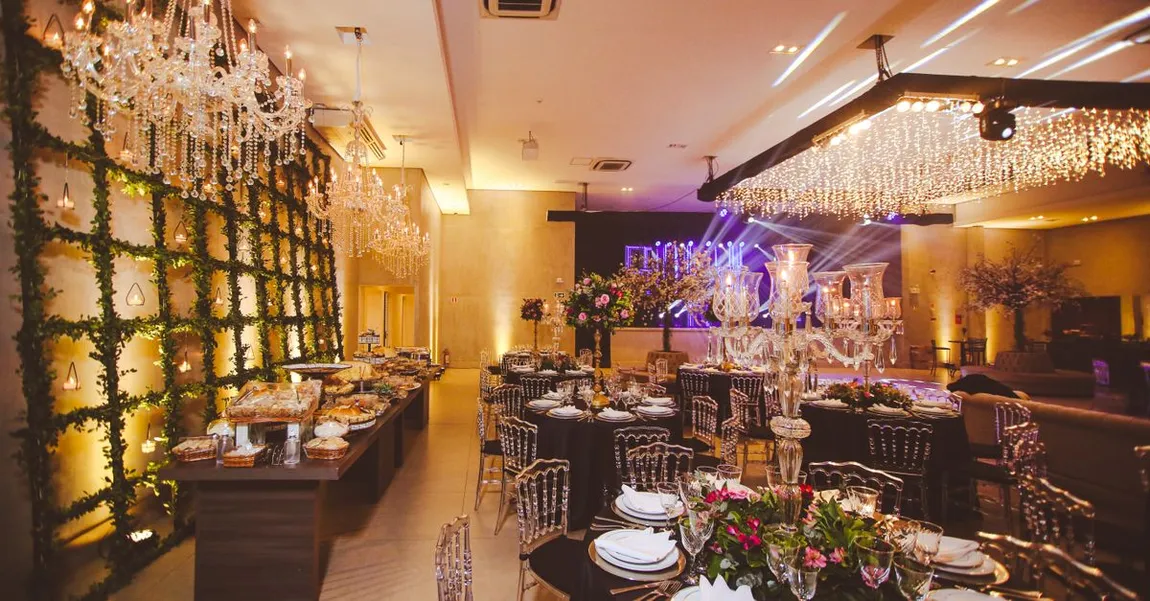
A full henna evening for 40 guests runs between 13,300 and 26,000 MAD (1,230 to 2,400 EUR), with Casablanca and Marrakech averaging 25% more than Meknes or Oujda. Watch one common billing trap: an 800 MAD quote often covers the bride alone, with 50–100 MAD billed per guest afterward. Lock a written cap or hire a second artist just for guests (300–500 MAD). For female dakka groups, put performance hours and transport in the contract and limit deposits to 30%. Kept unhurried, this night produces your most natural wedding photos.
| Item | Economy | Comfort |
|---|---|---|
| Bride outfit | 1,500 MAD | 4,000 MAD |
| Henna artist | 800 MAD | 2,000 MAD |
| Decor | 2,000 MAD | 4,000 MAD |
| Dinner | 4,000 MAD | 7,000 MAD |
| Dakka group | 2,000 MAD | 4,000 MAD |
| Photography (half day) | 3,000 MAD | 5,000 MAD |
Accessories, Footwear & Henna Artist Contract Tips
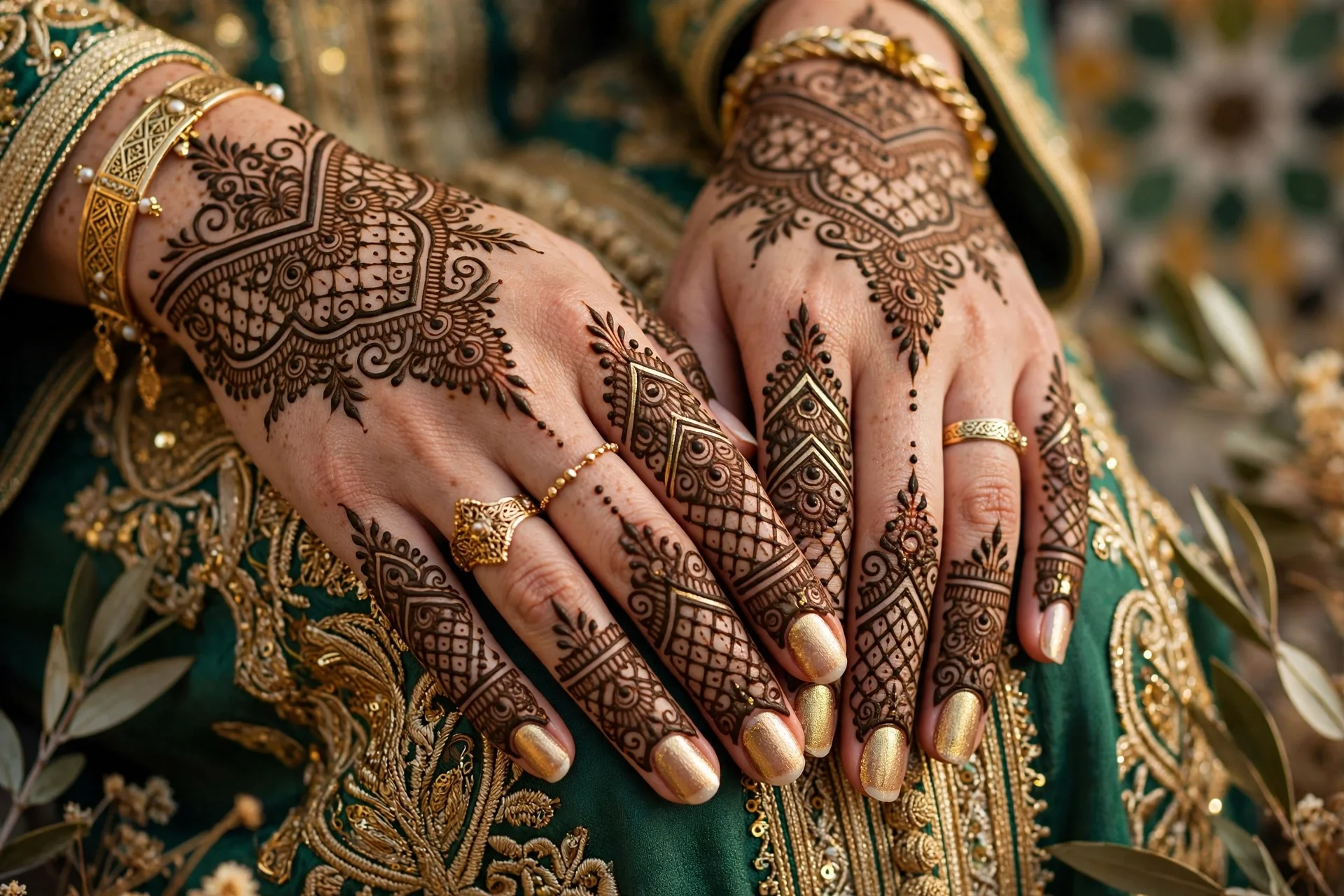
A polished henna look depends on small practical choices that keep you comfortable all night. Pick embroidered cherbil slippers or a low 5 cm heel (300–700 MAD / 28–65 EUR) so you can greet guests without sore feet. Keep jewelry light—a matching mdamma belt and delicate earrings work better than the heavy bridal set saved for the main hall. When booking your henna artist (800–2,000 MAD / 75–185 EUR), turn down black chemical cones that can trigger skin reactions days before your wedding; specify fresh natural henna mixed with lemon and orange blossom water in writing. Have the artist arrive three hours before guests, cap the deposit at 30%, and pay the remaining 70% once the design is finished. Set up one well-lit corner near a window or warm lamp so your photographer captures crisp close-ups before dinner starts and before the paste dries.
FAQ & Henna Night Timeline
Q: When should henna night take place? A: One or two evenings before the main hall day so the stain deepens and you get rest. Q: Are men invited? A: Increasingly in large cities, the first hour stays women-only and the groom's family joins later. Q: How do I time the henna application? A: Start two hours before guests arrive so you can greet everyone without sitting still all evening. Q: Is a decorated throne chair (500–1,500 MAD) worth it? A: Yes, because it frames nearly every family photo. Q: Should I wear a veil or heavy crown with the henna outfit? A: A light sheer wrap or small hairpiece works better, since heavy veils snag when lifting your hands during henna application and greetings.