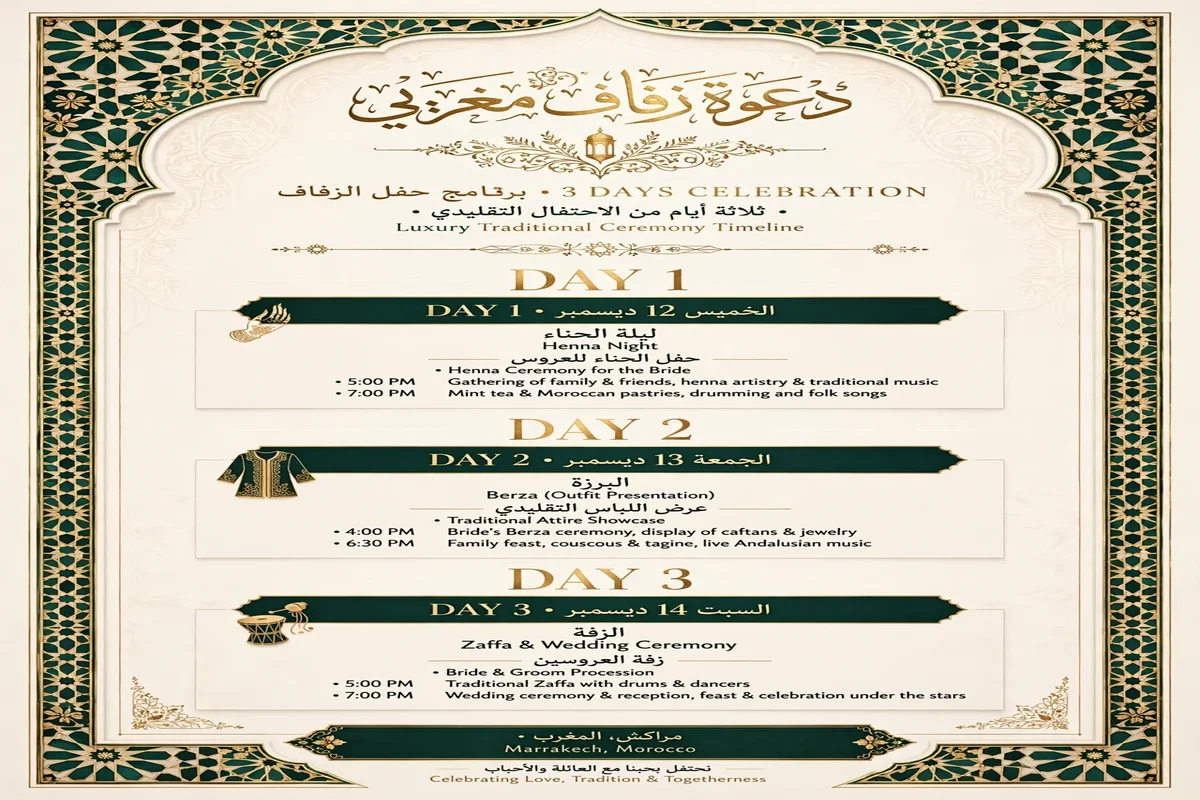
3-Day Moroccan Wedding Program: The Complete Day-by-Day Plan 2026
The traditional 3-day Moroccan wedding program: henna night, wedding day with the aqad ceremony, then farewell lunch — with an indicative budget per day.
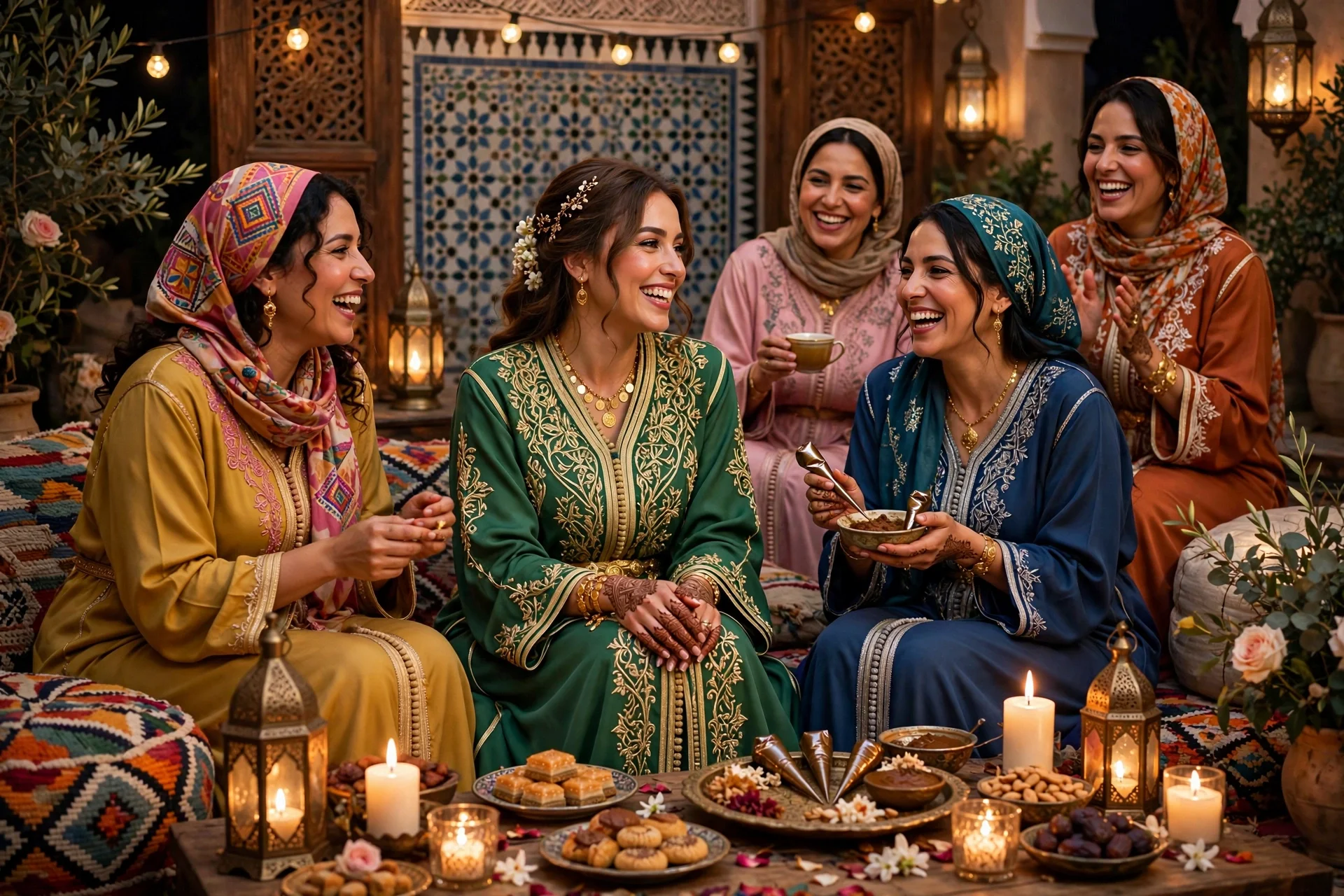
Day 1: The Henna Night
Celebrations start with the henna night at the bride's home or a small hall (20-60 guests). Indicative budget: 8,000-15,000 MAD including the henna artist (500-1,500 MAD), tea service (2,000-4,000 MAD), simple khayma decor (2,000-5,000 MAD), and light buffet (3,000-5,000 MAD).
Day 2: Wedding Day and the Aqad
The big day: the aqad ceremony in the morning at a mosque or before a adoul (1,000-3,000 MAD), then the evening reception. 80% of your total budget goes here: caterer, venue, neggafa, orchestra, photography and decor. Use the WedMaroc calculator to split it by city — Marrakech's 1.25 multiplier means pricier venues than Fes at 0.95.
Day 3: Farewell Lunch
A light, cheaper day: family lunch (30-80 guests) with simplified catering or tagines (150-300 MAD/person), often with Quran khatma. Budget: just 5,000-12,000 MAD. Also the best slot for natural-light couple photos — add it to your photographer's contract.
FAQ 3-Day Program
Q: Can 3 days be merged into 2? A: yes, many families combine henna and reception, saving 20-30%. Q: What does a 3-day wedding cost? A: 150,000-300,000 MAD depending on city and guest count. Q: Which day matters most? A: the wedding day — put 80% of budget there.
Combined 3-Day Budget: Summary Table
Answering the question every inbox asks: what is the grand total? The table combines three days in a mid-cost city with 200 guests at the main reception, 60 at henna night and 80 at farewell lunch. Realistic total: 165,000-280,000 MAD depending on caterer and venue tier. Wedding day alone consumes over two-thirds — savings on days one and three are bonus room, not obligations.
| Day | Guests | Price range | Priority |
|---|---|---|---|
| Henna night | 40-60 | 13,000-26,000 MAD | Medium |
| Wedding day & aqad | 150-250 | 130,000-230,000 MAD | Maximum |
| Farewell lunch | 60-100 | 12,000-24,000 MAD | Low |
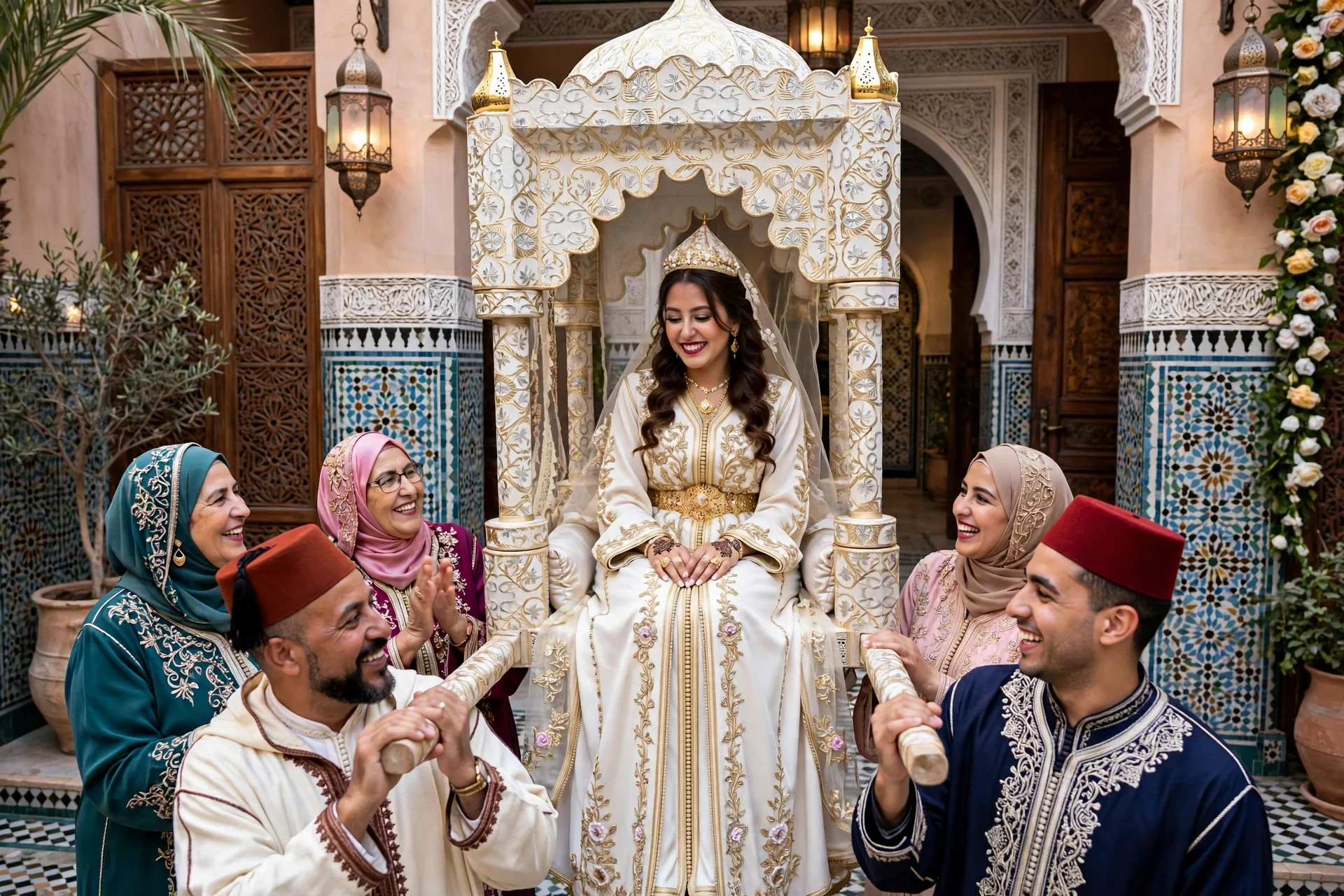
Role Assignment: Who Runs What Each Day?
Multi-day weddings collapse when the bride runs everything. Proven split: day one belongs to aunts and cousins plus one paid coordinator; day two needs a single on-site lead (2,000-4,000 MAD) holding every vendor contract, with exactly one person authorized to release payments; day three runs itself — someone opens the hall and receives the tagines. One task sheet per day, handed out a week early.
Classic Mistakes That Ruin Multi-Day Weddings
One: scheduling henna right after the wedding day — guests are exhausted and faces show it in every photo. Two: picking a venue far from guest hotels with no shuttle. Three: repeating the identical caterer menu on days one and three. Four: skipping a mandatory rest window between aqad and evening reception — six hours standing kills the first dance. Five: never giving the photographer the full multi-day program, so henna goes undocumented.
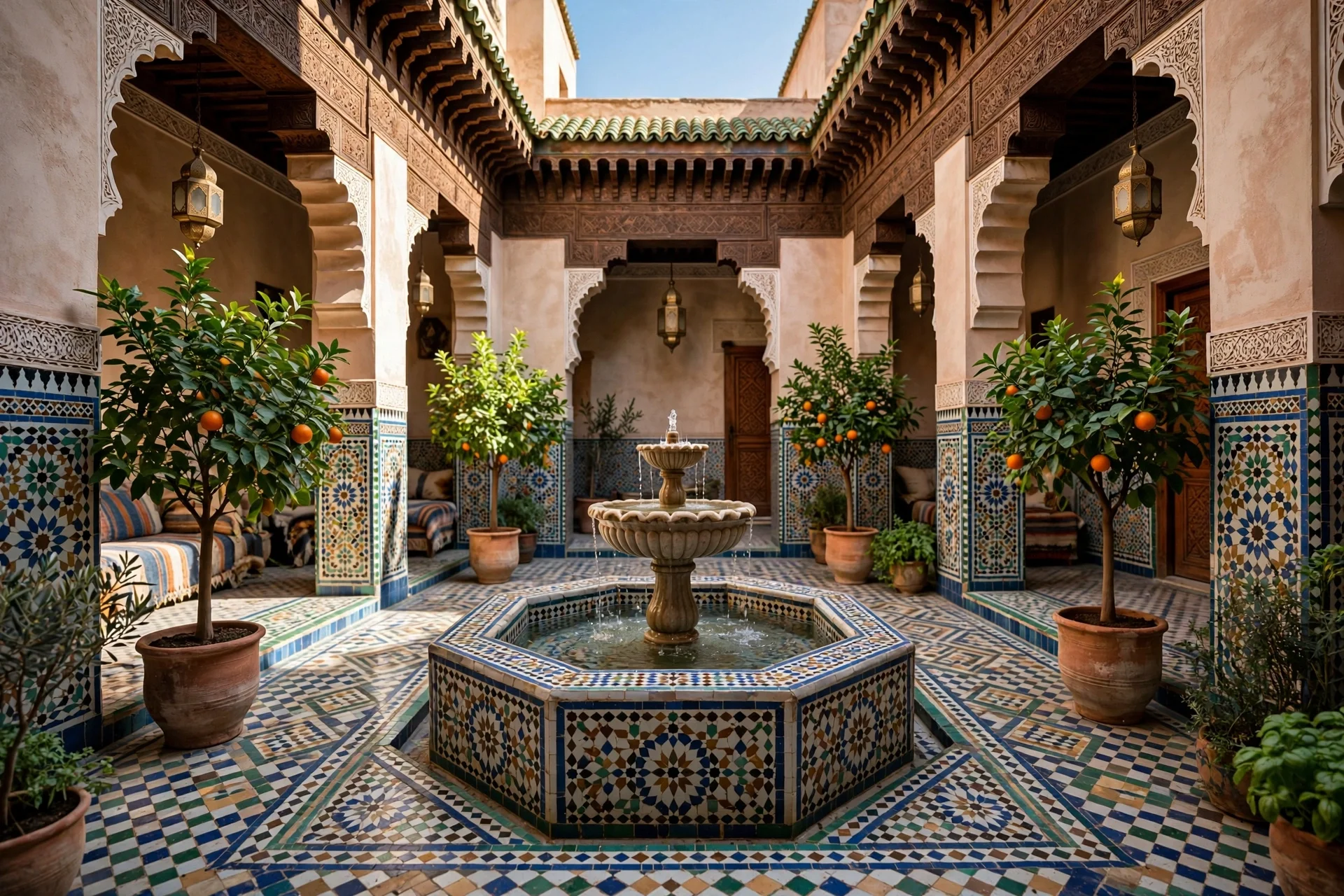
Documenting All Three Days: Photo & Content Strategy
Most couples pay for the wedding day only and regret it. Truth: henna night yields your richest Instagram content, while the farewell lunch delivers natural daylight shots impossible inside a dark hall. Budget-smart fix: a half-day photographer slot at henna (3,000-5,000 MAD) plus one hour at the closing lunch (1,000-2,000 MAD), with the main day fully covered in your core contract. Request five edited photos within 48 hours of each day — enough for thank-you posts while engagement is still peaking.
Regional Traditions: They Change From City to City
Fassi brides open their week at the historic Friday hammam then the Khomssa night two days before; Tetouani brides elevate the white-silver chedda and greet guests on the amaria in narrow medina alleys; Saharan henna turns geometric and collective across two nights to the kuidba rhythm; Marrakech opens its night to men more than any other city. Even the amaria has geography: alive in Fes and Sale alleys, practically gone from modern Casablanca halls. Ask the groom's family about regional custom before scheduling anything — you are not planning an agenda, you are entering a centuries-old family ritual.
Deqqak & Mezouen: The Rhythm That Makes the Party
In Fassi and Arab henna nights, the women's deqqakate — three to seven players striking overturned copper trays — are the beating heart: slow openers like 'ahlan bil-aroussa' building until the whole room dances. On the main day the mezouen leads the bride's entrance on personalized ahasizh chants. Rates: female deqqak group 2,000-4,000 MAD per night including a singing attendant; mezouen band 8,000-15,000 MAD by instrument count. Get a written contract fixing hours plus opening and closing songs — one precisely-set starting hour separates a legendary night from chaos.
Quran Khatma & the Milk Offering: Symbols You Never Cut
However tight your program, two rites stay untouchable: the Quran khatma after afternoon prayer on day one or two with candle trays lit by both families' women, then the milk offering presented to the couple before everyone — a purity symbol no family will drop. In Fes the tray carries sablé pastries; in the north, gold-wrapped dates; in the south, a special feast follows. Book a skilled reciter if none exists in the family (500-1,200 MAD) and schedule it one hour before dancing — that is the photo albums keep for forty years.
Wedding Day Hour by Hour: The Real Field Schedule
The paper schedule differs from reality — here is a field-tested timeline: 2pm the adoul arrives, the act takes one to two hours with readings; 4:30pm caterer builds the buffet and khayma; 6pm the neggafa readies the bride in a side room; 8pm the grand entrance — amaria or candle-bearers by city custom — followed by milk-and-dates reception until 9; dinner 9-10:30; the torhta and cake around 11pm; then dance floor until 2-3am. The single biggest tip: hand the photographer this written schedule with the key names at each station — he will not know your maternal uncle must be photographed during the act unless you tell him.
What the Groom Wears Each Day: A Three-Look Guide
The Moroccan groom needs three looks: a white or beige light-qasba djellaba for henna night (400-1,200 MAD) where comfort rules during hours of dancing; a groom caftan in navy or grey with light embroidery, embroidered slippers and prayer beads for the wedding day (2,500-8,000 MAD) — some add the white burnous over the shoulders for the historic aqad moment; and an existing light suit for the farewell lunch. Common mistake: renting the grooms caftan from the same shop as the bride — an artificial matching set; an intentional variation reads better: him navy, her emerald, complementary in every photo.