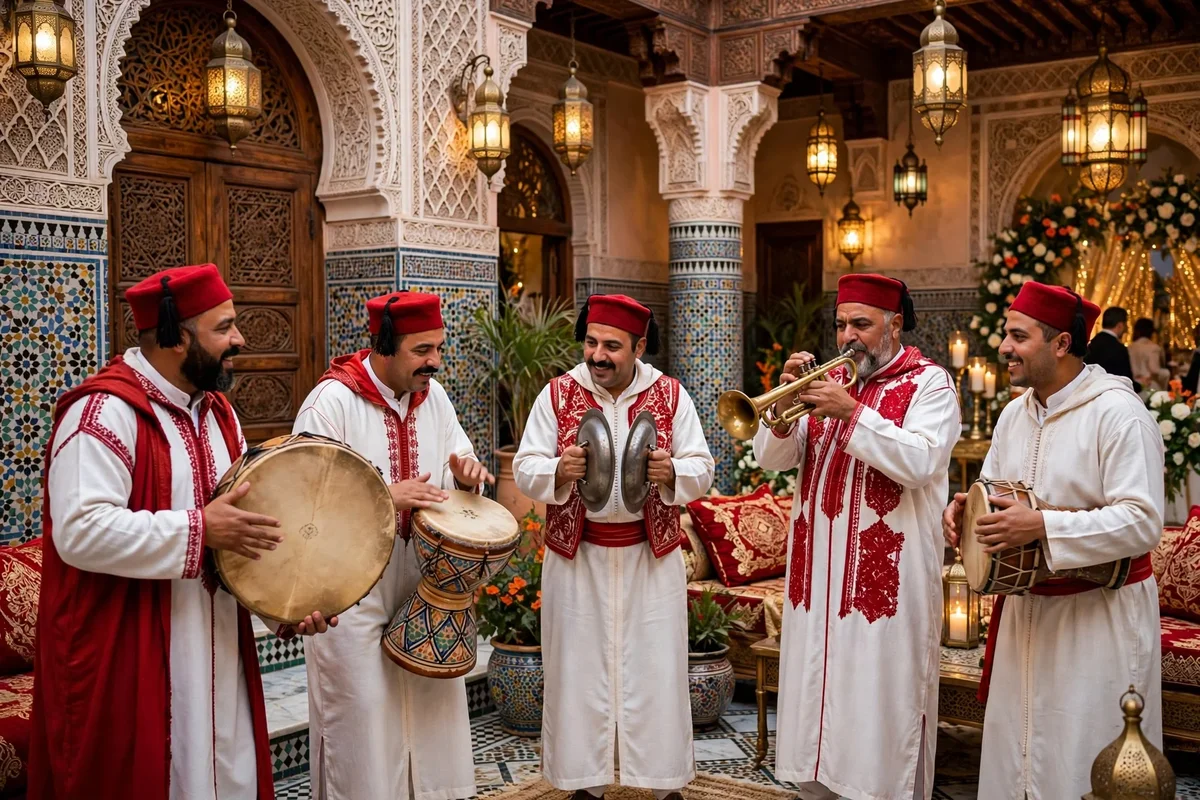
Aissawa & Dekka Marrakchia Moroccan Wedding Guide 2026: Prices, Packages, and Entrance Protocol
Complete 2026 guide to Moroccan Aissawa and Dekka Marrakchia wedding troupes: package pricing, grand entrance etiquette, city comparisons, and contract tips.
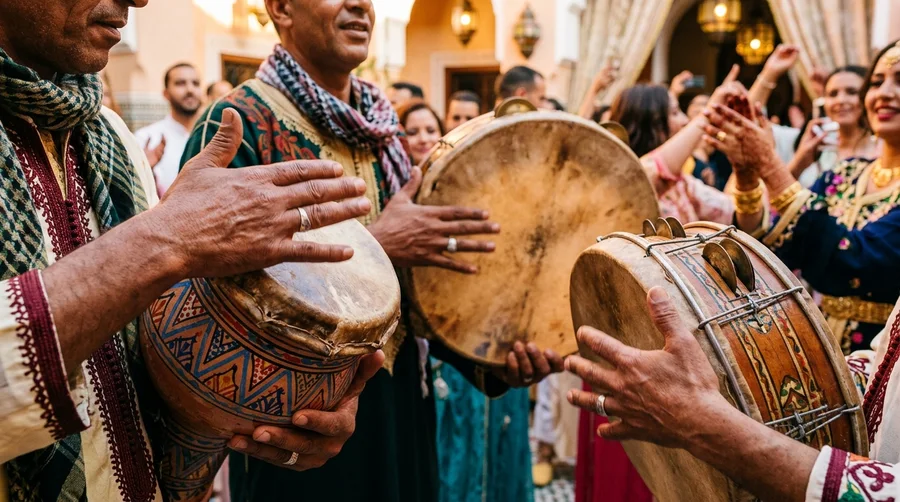
Aissawa vs. Dekka Marrakchia: Distinct Rhythms and Wedding Roles
Traditional Moroccan folk troupes bring high energy to a wedding celebration. "Aissawa" ensembles offer a majestic spiritual resonance with long brass horns (Nffar), woodwind ghaitas, and heavy bass drums, well suited for the groom's entrance and the Dfou procession. "Dekka Marrakchia" pulses with fast syncopated rhythms on clay taarija drums, making it the classic choice for lifting the Amaria carriage and getting guests onto the dance floor. **Sound-System Setup & Venue Acoustics:** In a compact riad courtyard, an 8-person acoustic troupe needs zero amplification. In a large 300-guest Casablanca or Rabat reception hall, however, unmic'd vocals and *taarija* drums get swallowed by high ceilings. Ask your DJ or orchestra sound engineer to provide two wireless handheld mics for the *Moqaddem* (troupe leader) and lead vocalist, plus a quick 15-minute soundcheck before guests arrive so the transition between live percussion and the DJ set stays clean.
| Package & Members | Performance Duration | Casablanca & Rabat | Marrakech & Fes |
|---|---|---|---|
| Welcome Package (4-6 members) | Guest greeting + Dfou (1-2 hours) | 2,500 - 3,500 MAD | 2,000 - 3,000 MAD |
| Key Entrances (6-8 members) | Dfou + Amaria + Henna (3 sets) | 4,000 - 5,500 MAD | 3,200 - 4,500 MAD |
| Grand Royal Troupe (10-14 artists) | Full night accompaniment + Amaria carriers | 6,500 - 9,500 MAD | 5,000 - 7,500 MAD |
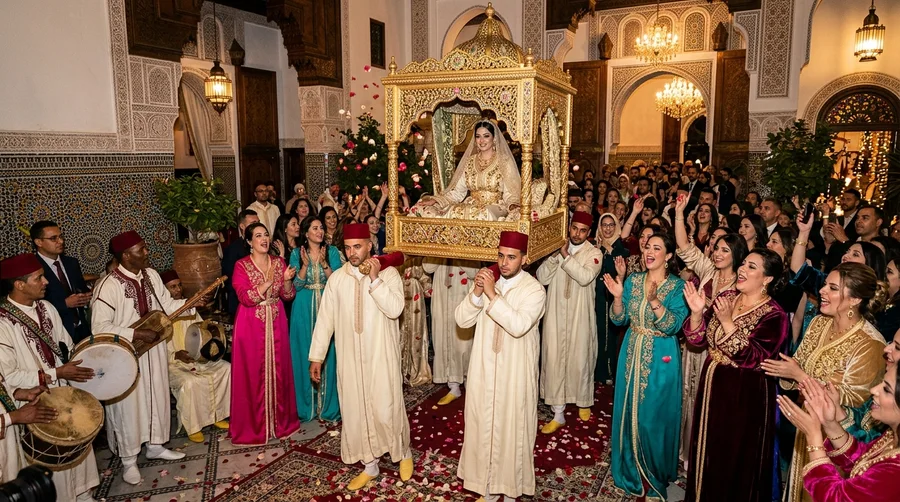
Timing and Protocol for Traditional Wedding Entrances
Good timing relies on close alignment between your troupe leader (the Moqaddem), your *traiteur*, and your Negafa: 1. **First Entrance (Groom Arrival & Dfou - ~9:00 PM):** Aissawa announces the arrival with royal brass horns and deep drums as gift trays are received. 2. **Dinner Pause & Zaffa Cue (~10:30 PM – 11:30 PM):** Never schedule loud *Nffar* horns while tables are eating *pastilla* or *tajine*. Let the caterer clear main plates first, then give the Moqaddem a 10-minute warning so the *Amaria* Zaffa starts on cue while guests are refreshed. 3. **Second Entrance (The Royal Amaria - ~11:30 PM):** Dekka Marrakchia builds intense rhythms as the bride is hoisted on the Amaria carriage amid ululations. 4. **Third Entrance (Traditional Fassi Dress - ~1:30 AM):** Dignified acoustic performance highlighting Andalusian melodies and blessings. 5. **The Grand Finale (Cake Cutting - ~3:00 AM):** High-spirited Chaabi rhythms uniting both families on the central dance floor.
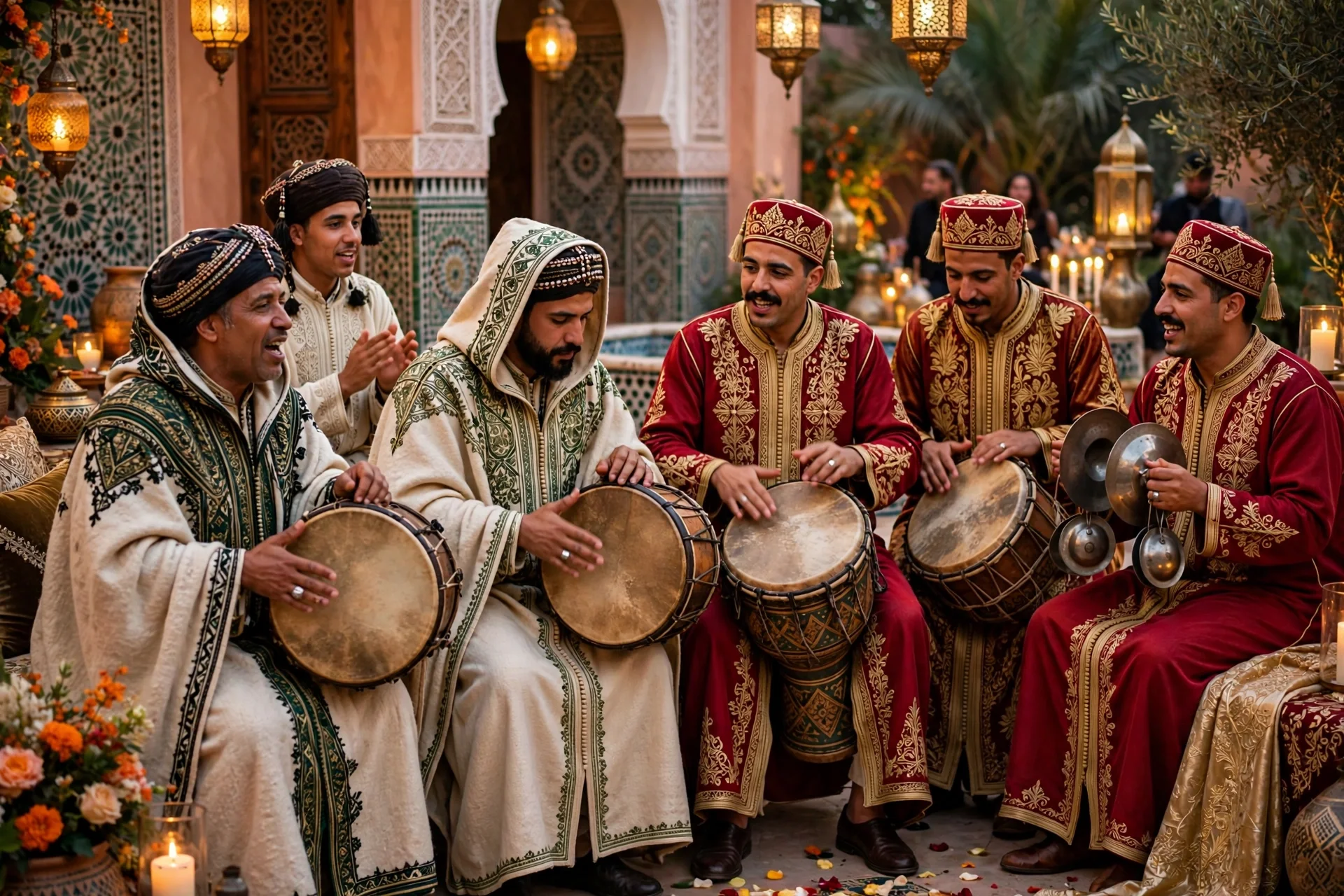
5 Practical Tips Before Booking Your Folk Troupe
1. **Mandate Uniform Attire:** Stipulate in writing that musicians must wear matching cream djellabas and authentic red tarboosh hats. 2. **Lock in Deposit & Overtime Clauses:** Pay a 30% to 40% deposit on a signed *bon de commande* with the balance paid on-site, write down the exact cutoff hour (such as 3:30 AM), and agree upfront on a flat hourly overtime rate (500–800 MAD) if the finale runs late. 3. **Include Vendor Meals:** Arrange a dedicated meal table with your caterer for the performers so service stays smooth. 4. **Vetted Amaria Carriers:** Verify that the 4 designated carriers are physically experienced and practiced in hoisting and rocking the carriage safely. 5. **Bundle with Your Wedding Orchestra:** Many Moroccan orchestra bandleaders provide integrated folk percussion sub-troupes at a 20% to 30% package discount.