Who Pays for a Moroccan Wedding in 2026? Traditions and Budget Breakdown
Realistic cost-sharing for Moroccan weddings in 2026: Mahr vs reception split, regional customs across North, Casa-Rabat, Marrakech-Souss, and Oriental, plus written budget tips.
Who Pays What? Sadaq (Mahr) vs Ceremony Costs in Moroccan Custom
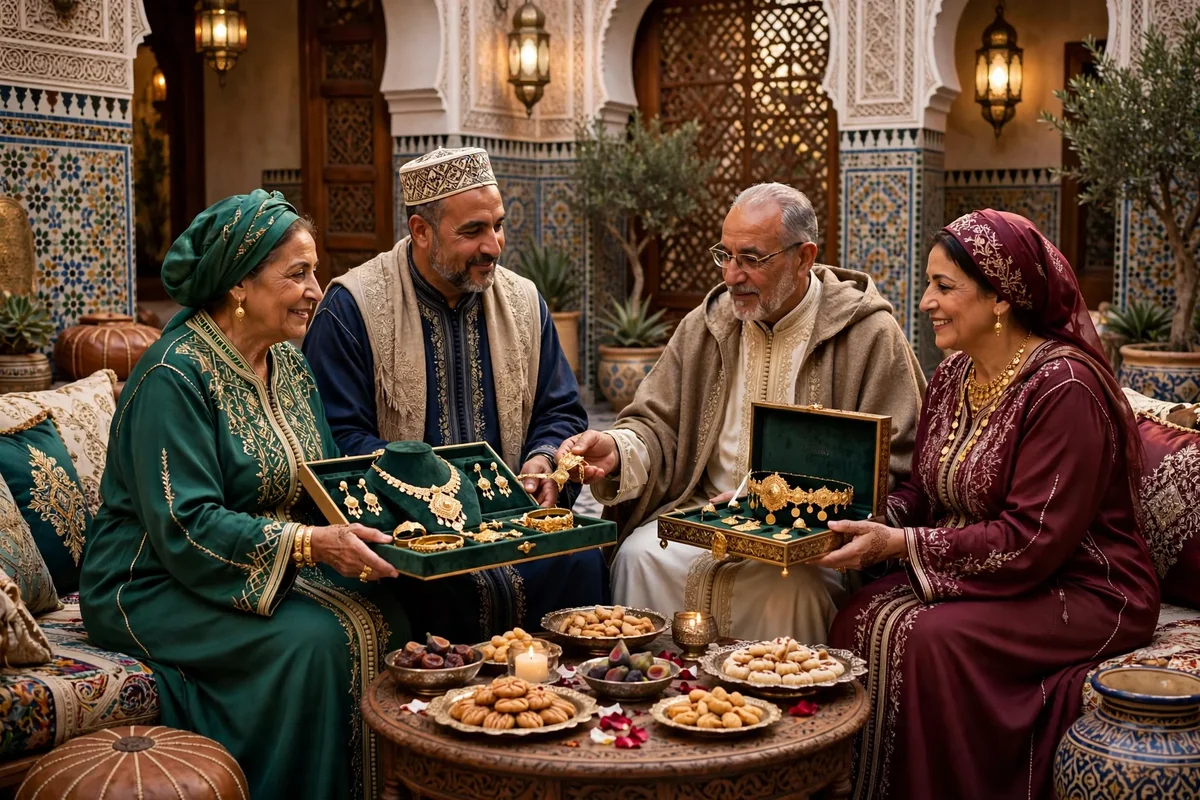
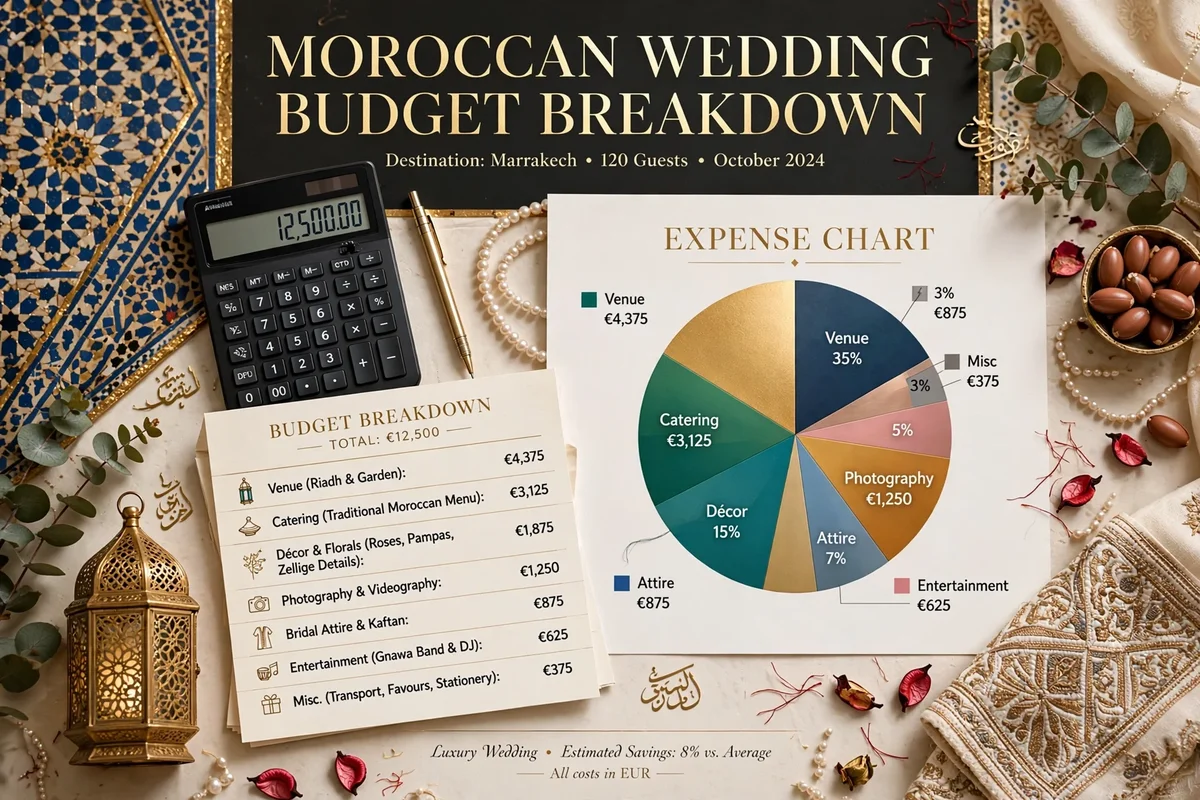
When planning a Moroccan wedding budget, it helps to separate the **Sadaq (Mahr)** from ceremony bills, as they follow different rules: - **The Sadaq (Mahr):** A legal requirement under Morocco's Family Code paid by the groom directly to the bride (commonly 5,000 to 50,000 MAD by mutual agreement). It belongs solely to her, not to reception vendors. - **The Ceremony Split:** Reception expenses are purely customary. Traditionally, the groom's family covers the venue, catering (traiteur), music, and Adoul fees (600 to 2,500 MAD), while the bride's family funds the henna night, negafa, and bridal trousseau (shoura and caftans). Today, most urban couples split the main venue and catering bill or pool funds together.
| Expense Item | Traditional Split | Modern 2026 Practice |
|---|---|---|
| Sadaq (Mahr) | Groom / his family | Groom only, symbolic or agreed sum |
| Venue & Catering | Groom's family | 50/50 split or proportional to guest list |
| Henna & Negafa | Bride's family | Bride's family or bride's own budget |
| Music & Photo/Video | Groom's family | Split between families or paid by couple |
| Adoul & Court Fees | Groom's family | 600-2,500 MAD, usually covered by groom |
How Cost-Sharing Differs Across Moroccan Regions
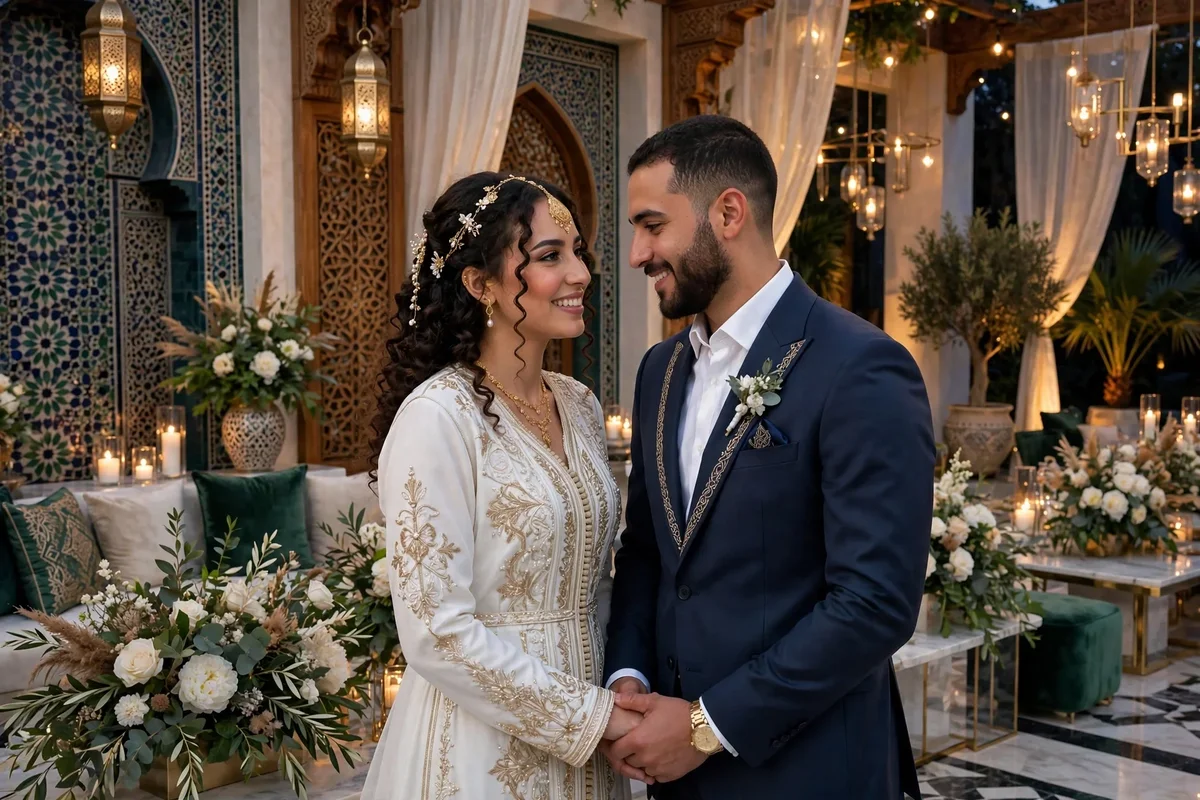
Regional habits shape family expectations across Morocco: 1. **The North (Tangier, Tetouan, Chefchaouen):** Multi-day events like the Bouja and Chedda are central. The bride's side usually hosts the henna or Bouja evening, while the groom's family funds the main hall, though dual-income couples increasingly split the main venue 50/50. 2. **Casablanca-Rabat Axis:** The most pragmatic split. The groom or his parents commonly cover the Sadaq and 50% to 70% of catering, while the bride's side handles the negafa, photography, and decor—or each family sponsors specific vendors. 3. **Marrakech and Souss (Agadir, Taroudant):** Family solidarity and elder mediation keep Sadaq amounts moderate, with relatives pitching in on hospitality, tents, or catering shares according to means. 4. **The Oriental (Oujda, Berkane, Nador):** Custom still leans toward the groom's family covering most of the feast and gold gifts (dfou3), while the bride's family furnishes the home trousseau, though diaspora couples often split venue costs down the middle.
How to Agree on a Written Budget Plan Without Family Tension
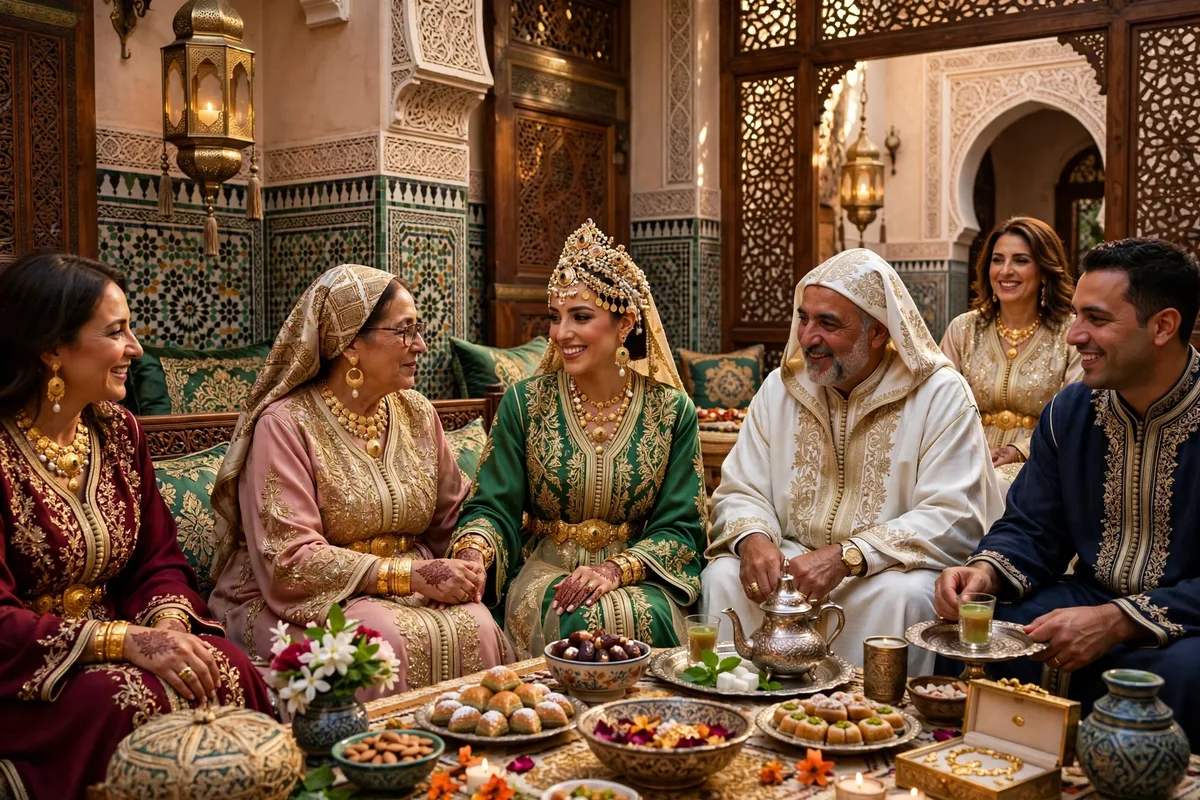
Most pre-wedding friction comes from vague verbal promises. Keep both families aligned with three practical steps: 1. **Hold a budget meeting before booking any venue:** Put every line item in a shared spreadsheet—venue, catering, negafa, band, photo/video, and Sadaq. 2. **Tie catering shares to guest quotas:** If one family invites 180 guests and the other 80, paying per table used by each side feels fair to everyone. 3. **Put payment dates in writing:** Send a polite summary message confirming who pays which deposit and when, so nobody is surprised two weeks before the wedding.
Special Cases & FAQ: Self-Funded Couples and Diaspora Weddings
**What if the couple pays 100% of the wedding themselves?** Self-funded weddings are increasingly common in major cities. To honor both sets of parents without straining their savings, the couple covers the main hall and catering while letting the bride's parents host an intimate home henna and the groom's parents present the Sadaq. **How do diaspora (MRE) couples split costs with family in Morocco?** When the couple earns abroad, they often cover 70% to 80% of the reception bill, while relatives in Morocco contribute in practical ways—such as homemade pastries, airport pickups, or hosting a casual family welcome dinner. **Does each family need an identical guest count?** Not at all. If one side brings 150 guests and the other brings 70, simply split the catering bill by the exact number of tables each family fills. **Who keeps cash gifts (ghrama) from guests?** In some regions cash gifts help offset family expenses, while modern couples usually keep them to furnish their home. Agree on this before the wedding night so no awkwardness arises afterward. Ultimately, Moroccan customs are meant to unite two families, not push either side into debt, so keep every financial agreement open, realistic, and tailored to what both households can comfortably afford.