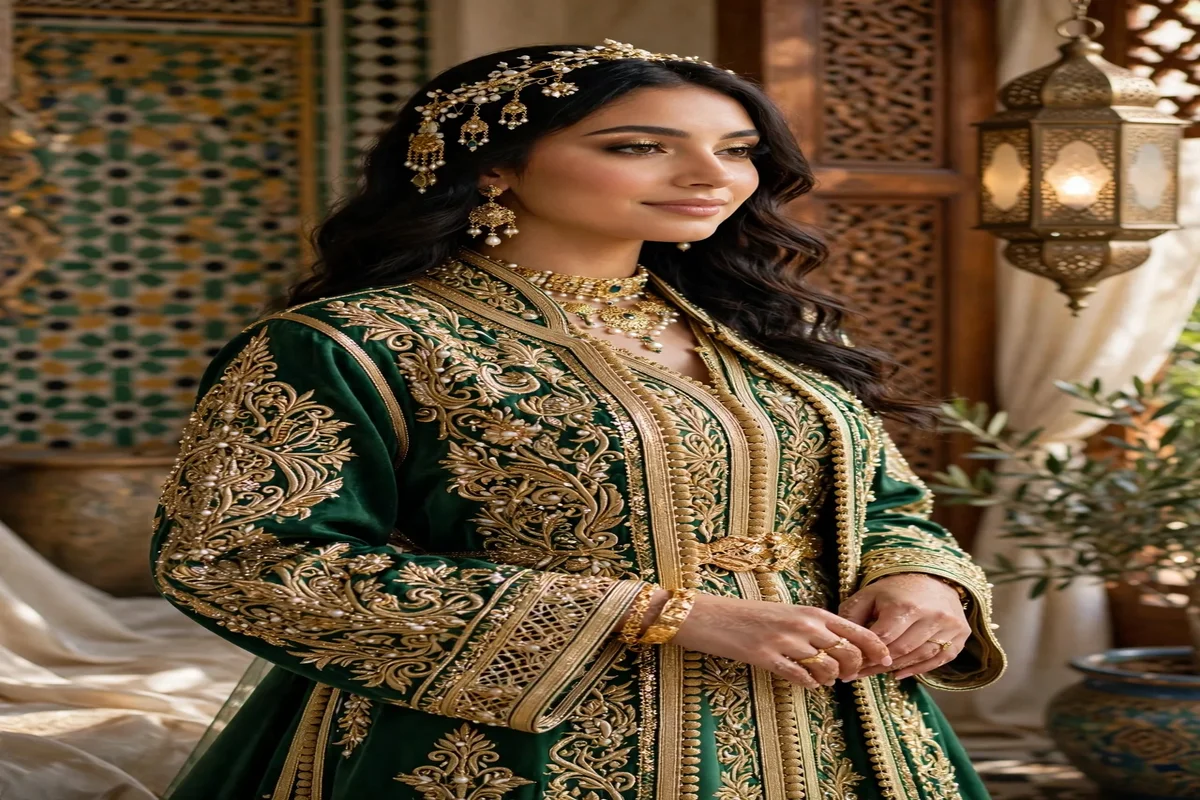
Wedding Dress & Takchita Prices in Morocco 2026: Buy or Rent?
2026 price table for wedding dresses, caftans and takchitas in Morocco: ready-made, tailored and designer — an honest buy-vs-rent comparison.
Ready-Made Caftan & Takchita Prices
Budget tier (Derb Omar, Casablanca): 800-2,500 MAD per caftan, 1,500-4,000 MAD for a two-piece takchita. Mid-range boutiques: 3,000-8,000 MAD. Known designers (hand-embroidered sfifa and mdamma): 8,000-25,000 MAD and up. Watch out: handwork quality drives price — request a close-up of the embroidery before buying online.
Tailored to Measure: Cost & Timeline
Traditional tailoring (skilled maalem): 1,500-4,000 MAD labor + fabric (1,000-5,000 MAD by grade). Luxury chiffon and hand-sfifa pieces exceed 10,000 MAD. Timeline: start 4-6 months out — initial measurements, monthly fittings, final delivery one week before the wedding. Never accept delivery without a full fitting including belt and mdamma.
Buy vs Rent: The Honest Comparison
Renting wins economically in 70% of cases: a luxury takchita at 2,000-6,000 MAD for the evening versus 15,000+ to buy, with zero storage or resale-loss headaches. Buying wins if: you will genuinely re-wear it (family weddings, henna), the fabric is investment-grade, or the piece is meant to be handed down. Compute cost-per-wear: purchase price / expected wears — above the rental rate, rent.
| Criterion | Rent | Buy |
|---|---|---|
| Cost per event | 2,000-6,000 MAD | 8,000-25,000 MAD |
| Fittings | Usually included | Extra cost |
| Re-use | Not possible | Unlimited |
| Best for | One standout night | Repeat family events |
FAQ Wedding Dress & Takchita
Q: When to get the dress? A: 3-4 months for tailoring, one month for rental. Q: European gown or takchita? A: most Moroccan brides wear both — gown for the grand entrance, takchita for henna or the finale. Q: Alteration costs? A: 200-800 MAD depending on scope.
2026 Fabric Prices: Derbi, Stretch Lycra, Chiffon
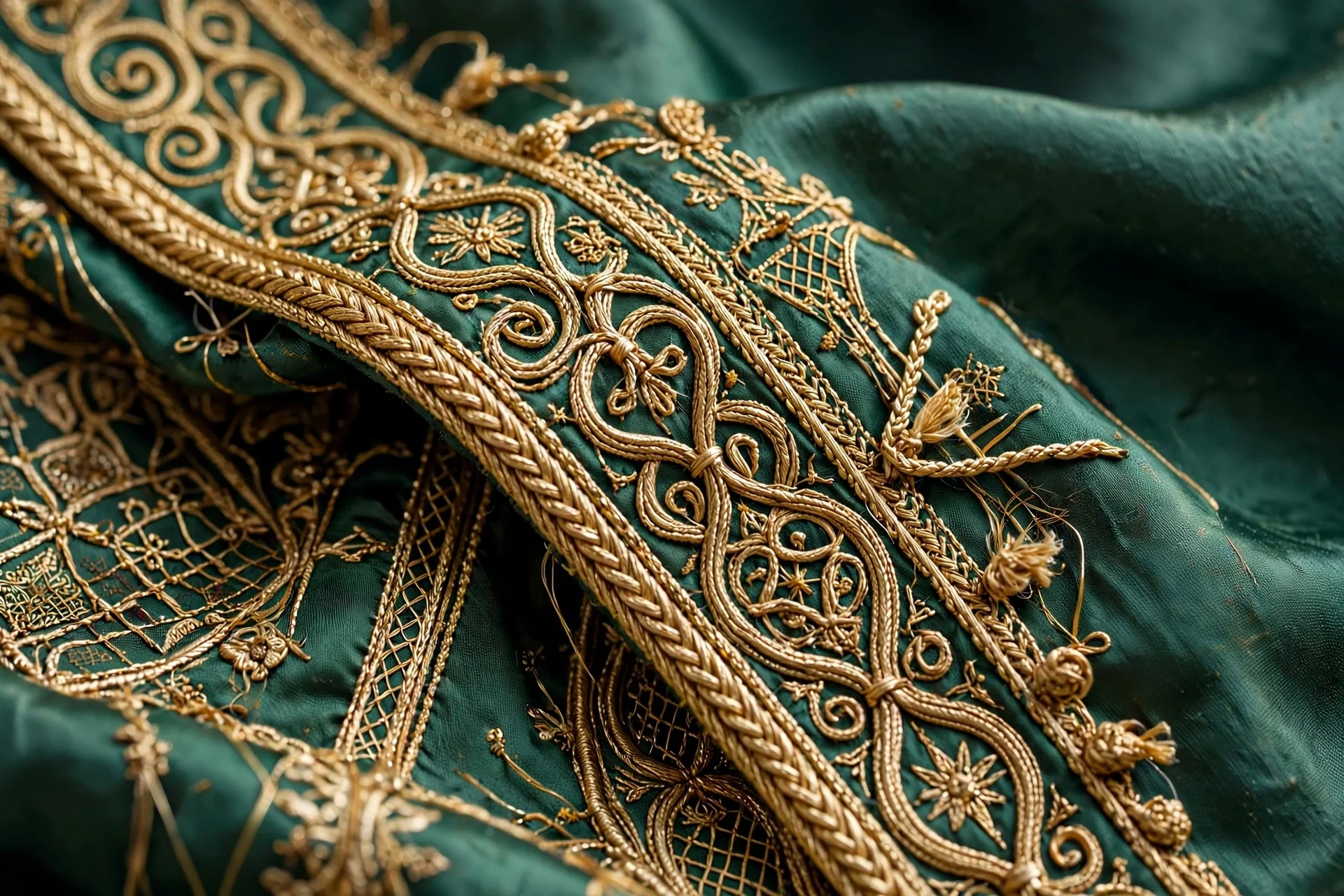
Half of tailoring cost is decided at the fabric counter. Per-meter rates in 2026: authentic Moroccan derbi 60-150 MAD, ready-embroidered stretch lycra 120-350 MAD, imported chiffon 180-450 MAD, gold-embroidered velvet for the upper layer 250-600 MAD. A complete two-piece consumes 4-6 meters below and 3-4 above plus belt — a fabric budget of 1,200-4,500 MAD before a single stitch. Old merchants tip: buy Tuesday or Wednesday mornings when fresh stock lands and negotiation flows easiest.
| Fabric | Used for | MAD/meter |
|---|---|---|
| Moroccan derbi | Henna & gatherings | 60-150 |
| Embroidered lycra | Party caftan | 120-350 |
| Imported chiffon | Upper layer | 180-450 |
| Gold velvet | Royal takchita | 250-600 |
Outfit Accessories: Belt, Crown, Babouche
An outfit without accessories is half dressed, and these lines sum fast: the golden belt (mdamma) 800-3,500 MAD by weight and finish, a jeweled crown 400-1,500 MAD, embroidered babouche slippers 150-500 MAD, a light shoulder shawl 300-1,000 MAD. Smart brides buy real resaleable gold instead of imitation that dies in value within a month — a genuine mdamma is an investment, an imitation is an expense. Most forgotten touch: dye-dipping the babouche to match the outfit exactly, a 50-120 MAD service.
Resale Value: Recovering Part of the Spend
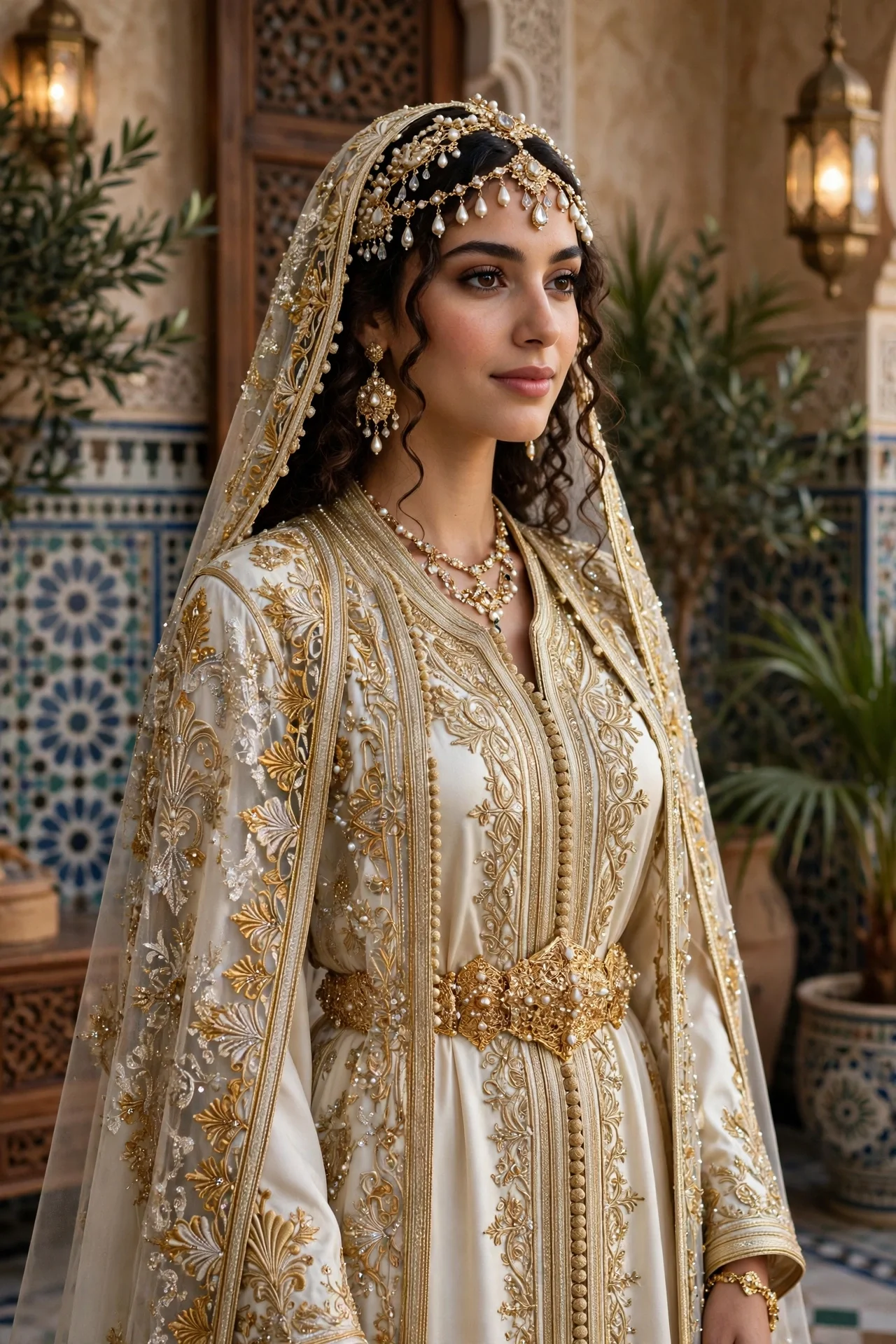
A quality outfit remains an asset, not a sunk cost. Three proven channels after the wedding: resale through luxury second-hand boutiques (recover 30-50% of an embroidered caftan's price if pristine), direct sale in brides Facebook groups (a 40% discount usually clears within two weeks pre-season), or family heirloom hand-down — highest symbolic value though zero cash. Golden preservation rule: no structural size alterations, keep the fabric invoice, dry-clean immediately after the final wear.
A Second Outfit for Henna & Finale: Worth a Separate Budget?
Urban custom now expects three outfits: hall takchita, henna caftan, and something light for the farewell lunch — an extra 2,500-7,000 MAD. Before drifting along: on a tight budget, one versatile neutral-toned takchita serves two days with just a belt-and-jewelry swap, saving around 4,000 MAD. If you go for the second look, the rule: henna caftan in green or yellow using economical derbi fabric since candlelight hides detail anyway, while the farewell lunch happily accepts an elegant summer-white djellaba at symbolic cost.
Takchita Region by Region: Fes, Tetouan, the South
The Fesi takchita is the reference every tailor knows: two pieces in heavy velvet or gold-qasba brocade, a jeweled wide mdamma, formal straight sleeves — quiet luxury sewn in Qettounine district ateliers. The Tetouani counters with northern discipline: spider-thread-fine sfifa, whites and silvers, embroidery echoing the carved doors of old Tetouan — the priciest because handwork reaches 60% of cost. Southern and Saharan takchita breaks the rule: bold silk colors (violet, turquoise, bordeaux), geometric Hassani patterning, light fabrics built for Agadir heat. Your regional pick is not mere taste — it is a belonging statement read from your very first step into the hall.
Takchita Detail Glossary: Sfifa, Aqad, Randa, Naama
These terms are the negotiation language of the tailoring shop — know them and you bargain like an insider: 'sfifa', the braided cord closing the bodice and anchoring sleeves, handmade per meter (30-120 MAD), the tailor's first difficulty signal; 'aqad', rows of hand-twisted buttons — two hours per row, sometimes twenty rows on a royal piece; 'randa', dense circular chest-and-back embroidery billed per stitch unit; 'mejerrad', completely plain fabric — cheapest and fastest; 'naama', breathable open-work embroidery perfect for Agadir summers. When a shop offers 'naama with mejerrad and handmade sfifa' you will know exactly what you are paying for and why.
Where to Shop: Districts, Souks & Negotiation Craft
Morocco's shopping map for bridal wear: Derb Omar in Casablanca rules economy-to-mid ready-made — dozens of stacked shops, compare three prices before paying a single dirham, calm bargaining yields 20-30% off; Hay Hassane and Derb Ghallef for wholesale raw fabric; in Rabat, souk El-Houayajine and Attarine for imports; in Marrakech, silk shops around Jemaa Jadid for luxury embroidery — beware tourist-window pricing. Three golden bargaining rules: never reveal enthusiasm, always cite a cheaper competing shop, and ask for a final gift (shawl, black soap) instead of extra discount — granted easily, and the seller's goodwill wins you free future alterations worth far more than ten dirhams.
The Story Behind the Piece: From Al-Andalus to the Reception Hall
The takchita you wear condenses five centuries of cultural exchange: its roots trace to Al-Andalus dress carried by migrating families to Fes and Tetouan after Granadas fall, where the original caftan married European textile craft and birthed the two-piece form — smooth underlayer beneath a transparent overlayer opening onto the first like a poem written twice. The golden qasba itself is pure Andalusian craft: true gold thread wound on silk, embroidered with a special needle in at least one family workshop still operating in Fes. The randa arrived with Turkish women in the nineteenth century; the naama was invented for coastal summers. Knowing this story explains why an authentic Fesi takchita prices like fine art, not clothing — you are not buying an outfit, you are buying a textile manuscript worn once, then inherited.
Five Tips From Fes Veteran Tailors
Collected from maalems with forty years behind the needle: one — fit the outfit wearing the actual babouche, hem length depends on heel height; two — never pay everything upfront: one-third at order, one-third at first fitting, the balance after inspection; three — demand an itemized invoice separating fabric, meters and labor: your weapon in any dispute and a resale requirement; four — the second fitting must use the real mdamma, its weight changes how the takchita sits on your shoulders; five — get a written delivery date ten days before the wedding: a tailor who knows the deadline is short finishes your piece first while others wait until the last night.
Online Shopping: Opportunity and Trap in One
Sponsored Instagram takchita shops have exploded, running 20-40% below boutique prices. Three safety rules before any bank transfer: request a live close-up video of fabric and embroidery under daylight (edited photos hide flaws), check the accounts age and real buyer comments, and prefer cash-on-delivery or traceable half-half payment. Returns are near-nonexistent in this market — buy assuming the piece is final.