Comparing and Negotiating Wedding Quotes in Morocco 2026: The Contract and Vendor-Negotiation Guide
A 2026 guide to comparing 3 wedding quotes without confusion: what a valid devis must contain, how to normalize it per table, the Moroccan negotiation style that works, and the day-of contract in detail.
Why a written quote changes everything: the 8 mandatory elements
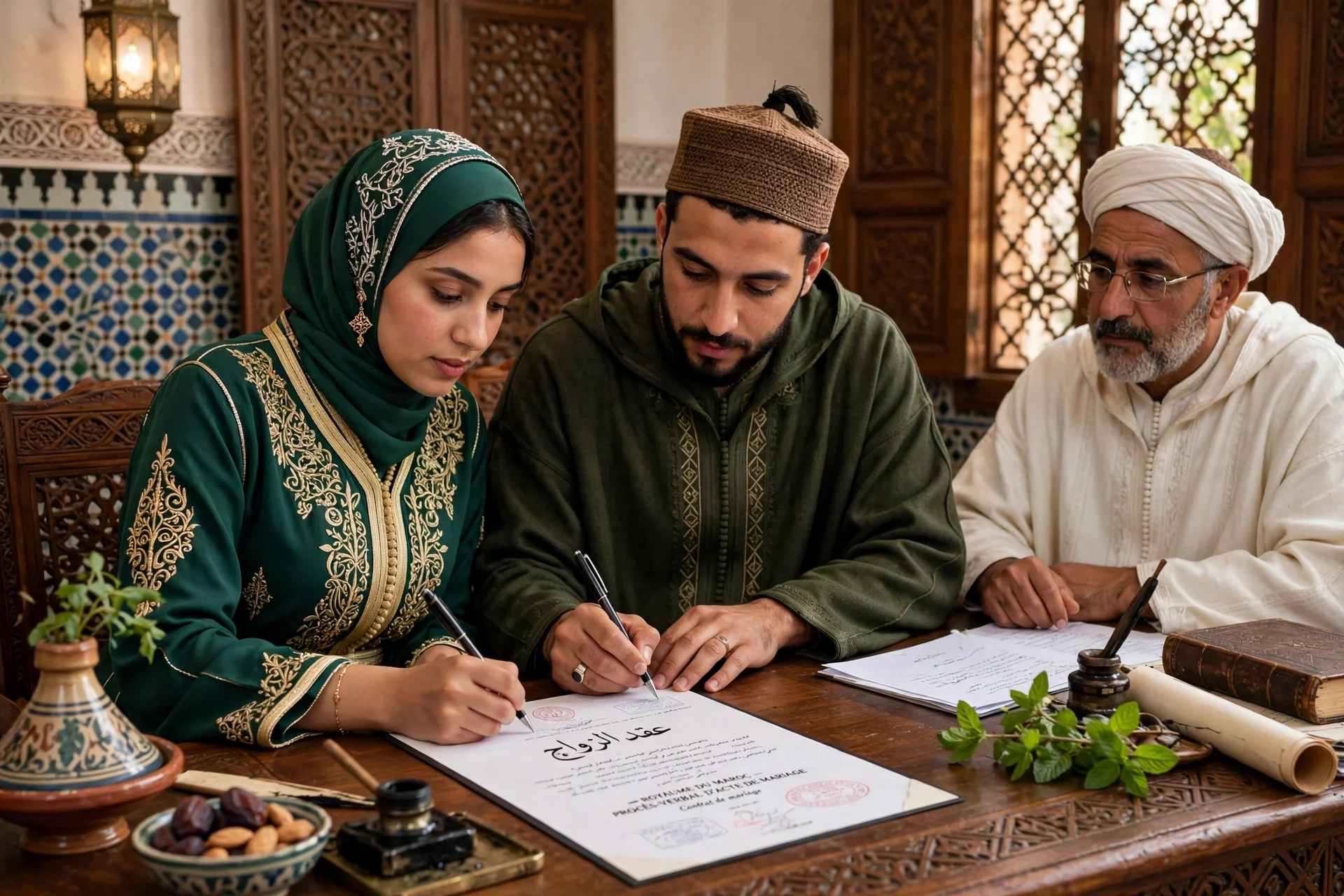
In the Moroccan market, 7 out of 10 wedding disputes are born from spoken promises. A valid quote contains 8 elements: 1) the provider’s full identity (legal name, ICE if registered, phone, address), 2) the exact date and service hours (from setup to teardown), 3) the quantitative detail (tables, menu per table, dresses, photo hours), 4) unit price and total, 5) written exclusions (cake, transport, VAT, extras), 6) the payment scale (deposit, installments, balance), 7) cancellation and postponement terms, 8) both signatures and the quote’s validity date (usually 30 days). If a vendor refuses even one element — first warning sign. A quote without written exclusions equals a surprise invoice.
Comparing 3 quotes without confusion: normalizing per table
Vendors do not price the same way: one bills “per table”, another “per menu”, a third “for the night” to look cheaper. To compare: bring every quote to one unit — the table of 10. Divide the total by the number of tables and fold excluded items back into that base. Then check 3 indicators. First: does the price gap reflect a real difference (meat vs chicken, richer tables, more hours) or just marketing? Second: is VAT or a service fee inside or outside the price — 15% on 100,000 MAD means 15,000 MAD hiding. Third: service hours — a 4-hour caterer is not an 8-hour caterer; it is not the same product. The table below lists a quote’s red flags.
| Red flag | What it means | What to do |
|---|---|---|
| No written exclusions | Any surprise becomes possible | Demand the “not included” list |
| VAT not mentioned | Up to 20% final gap | Ask: VAT-in or VAT-out? |
| “Table of 10” undefined | Children and short tables billed full | Fix the table rule in writing |
| No dates or hours | Vendor may double-book another wedding | Setup-to-teardown hours in writing |
| Cash only, no receipt | No trace in case of dispute | Bank transfer or signed receipt |
The Moroccan way to negotiate: 6 levers that actually work
Negotiation works in Morocco when it is respectful and number-based. 1) In person beats by phone — the market concedes 5–10% more face-to-face. 2) Low season and weekdays: 10–25% off is realistic on venues. 3) Bundling: grouping caterer + decor + pastries with one vendor saves 8–15%. 4) Negotiate decor, not food: catering has a real cost floor, decor has room to move. 5) Payment: 30% deposit + balance after the final walkthrough — it protects your leverage. 6) Competition: presenting 3 real quotes (“I have offers from other vendors”) unlocks 10–20% with a motivated seller. Careful: pushing below real cost builds failure into the wedding day — cheap service collects its price mid-meal.
The day-of contract: the final verification checklist
One week out, hold a final meeting with every vendor and verify the following. Caterer: the final table count (it moves in the last 2 weeks — 5% drift is customary, more gets billed), the service hour, and the vendors’ own meals (15–20 covers, included or not?). Venue: the table map, power supply, backup generator, closing time, and liability in case of incident. Neggafa: dress count and alterations, arrival time, end-of-night logistics. Photo: coverage hours, second camera, delivery date. For each: the direct lead’s phone number (not the office), and appoint a family member as “emergency manager” whose number circulates to every vendor. A wedding that goes well is not a lucky wedding — it is a verified one.